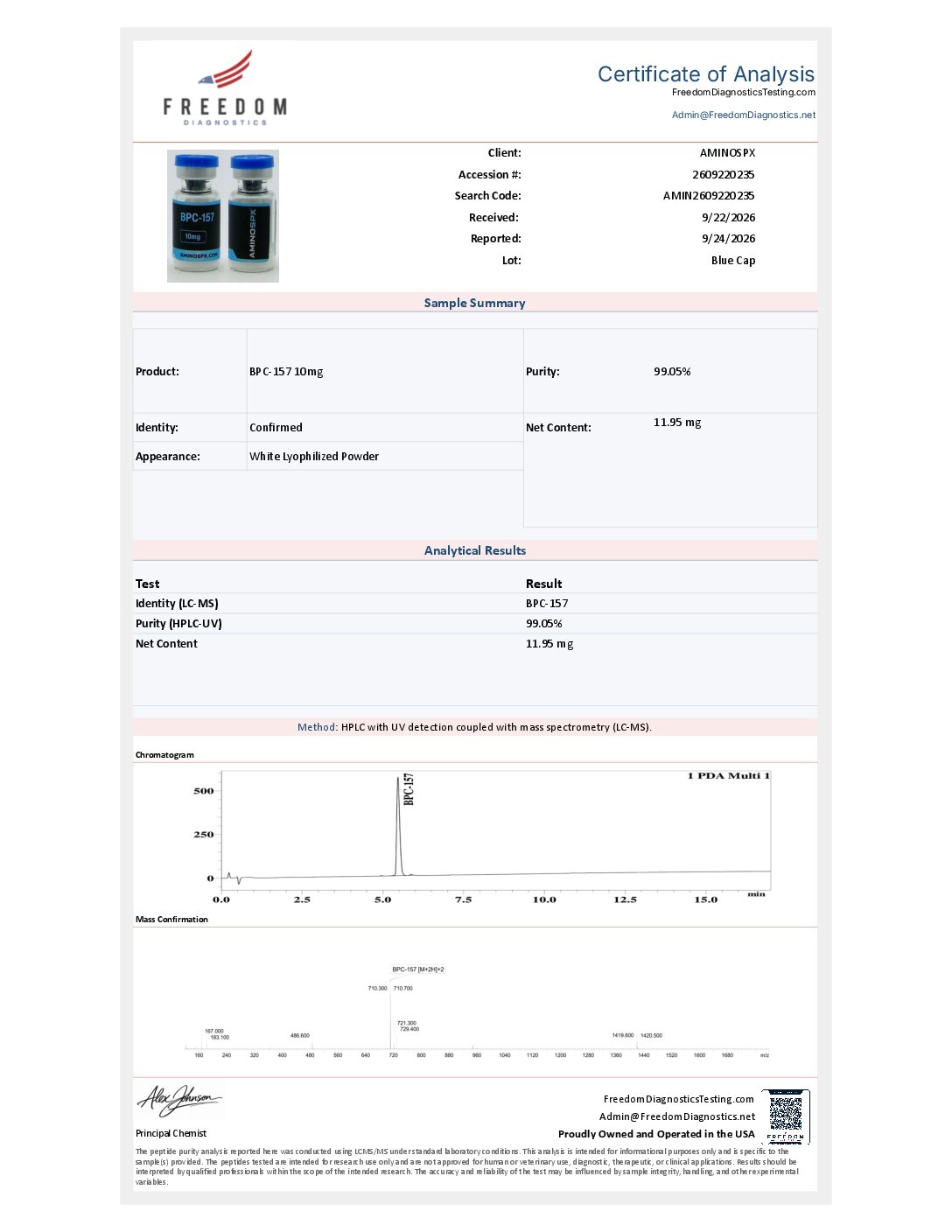
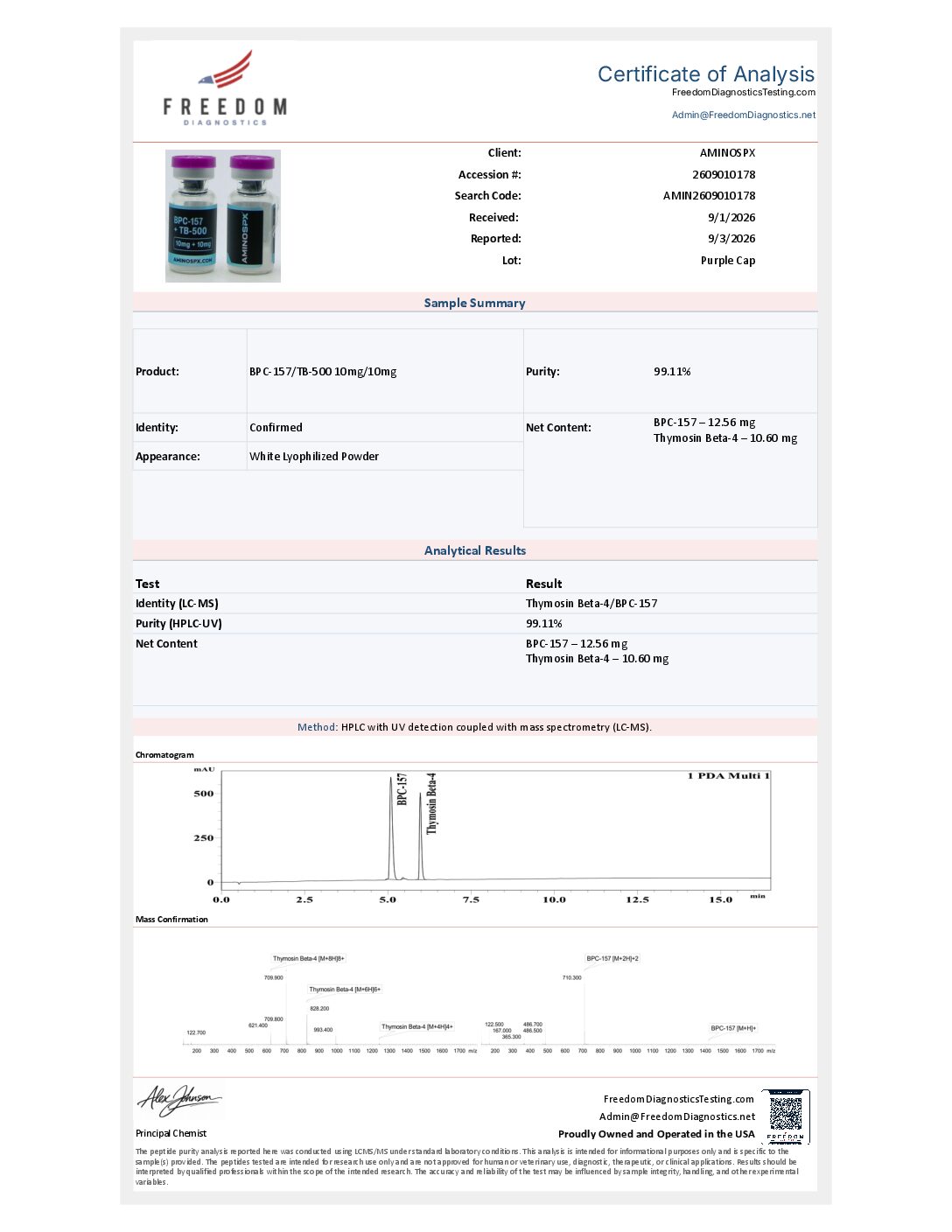
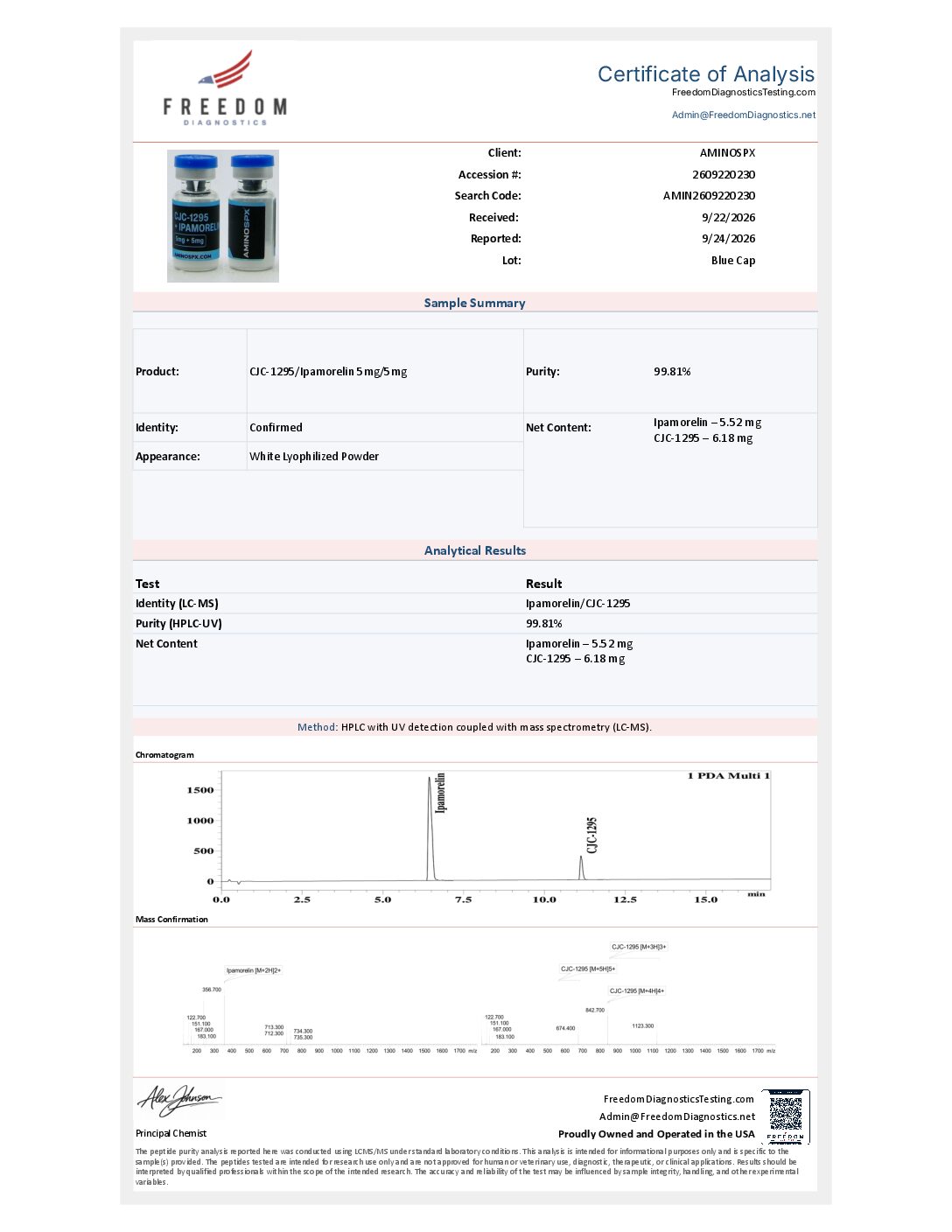
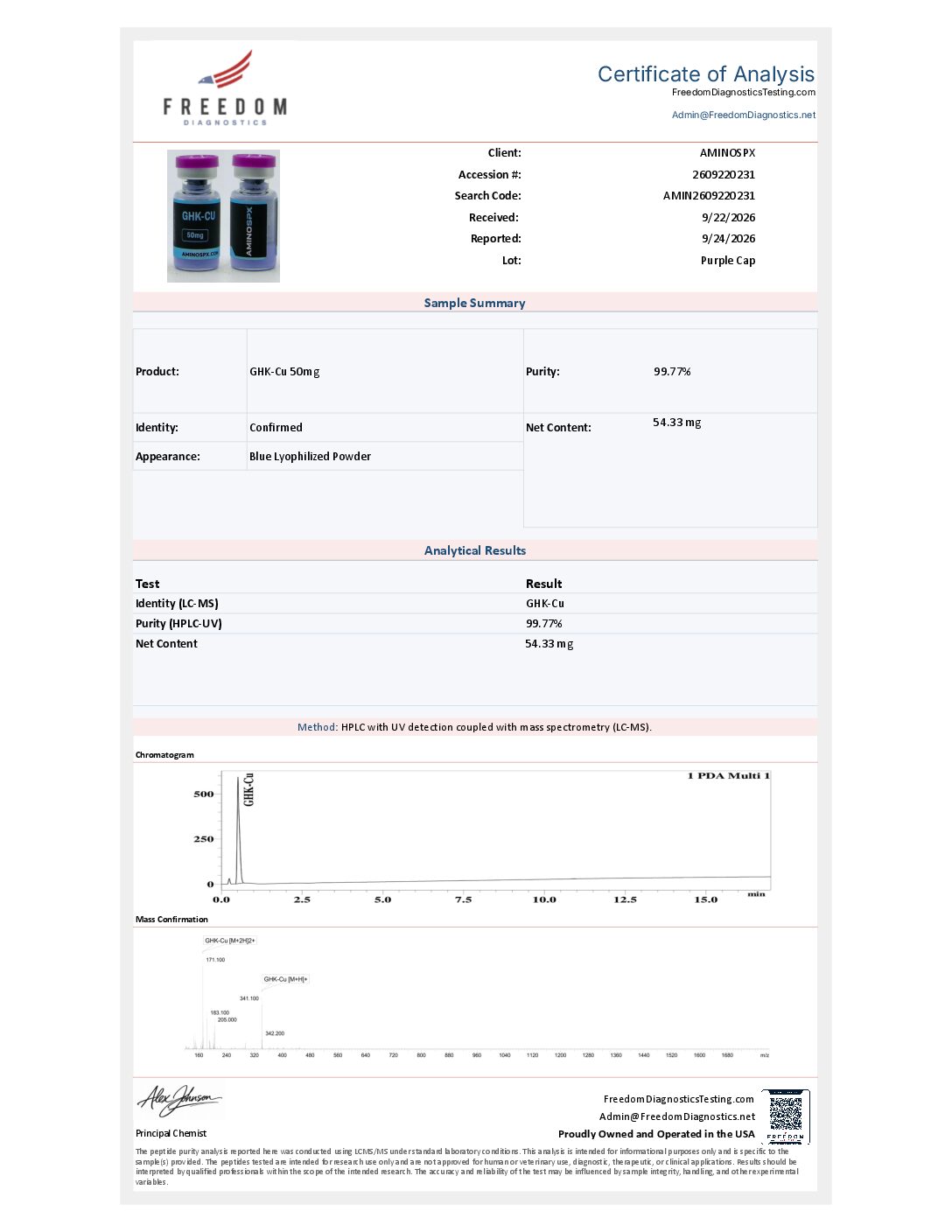
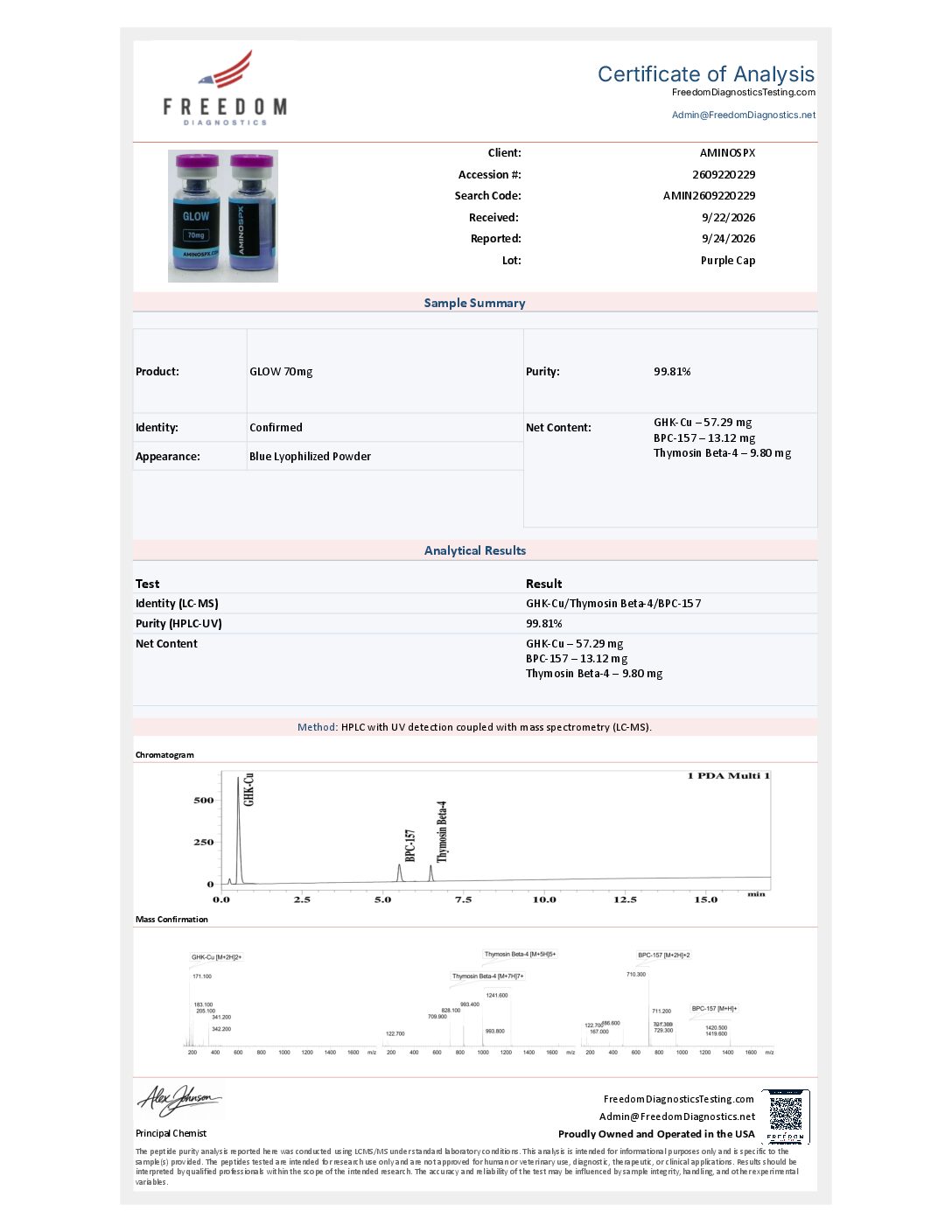
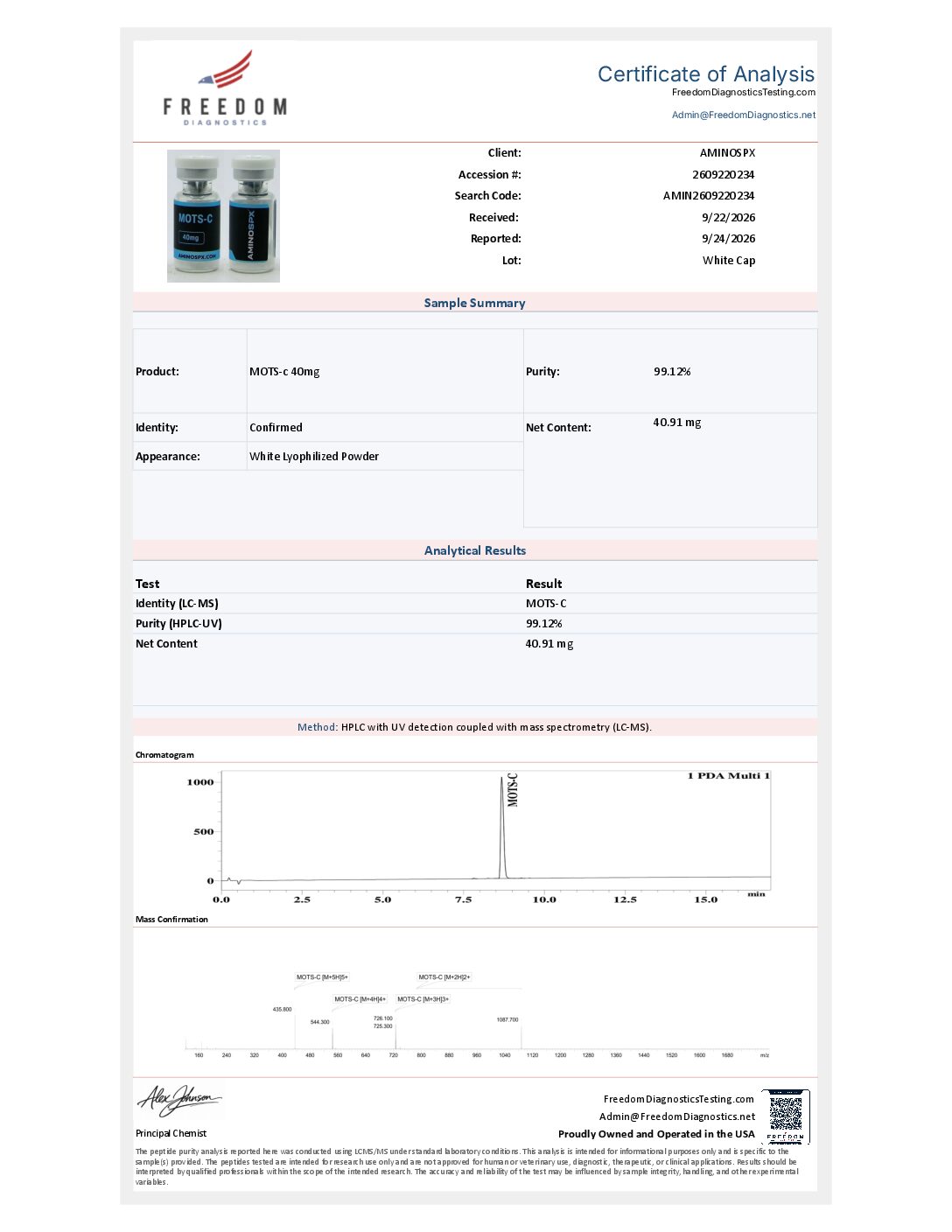
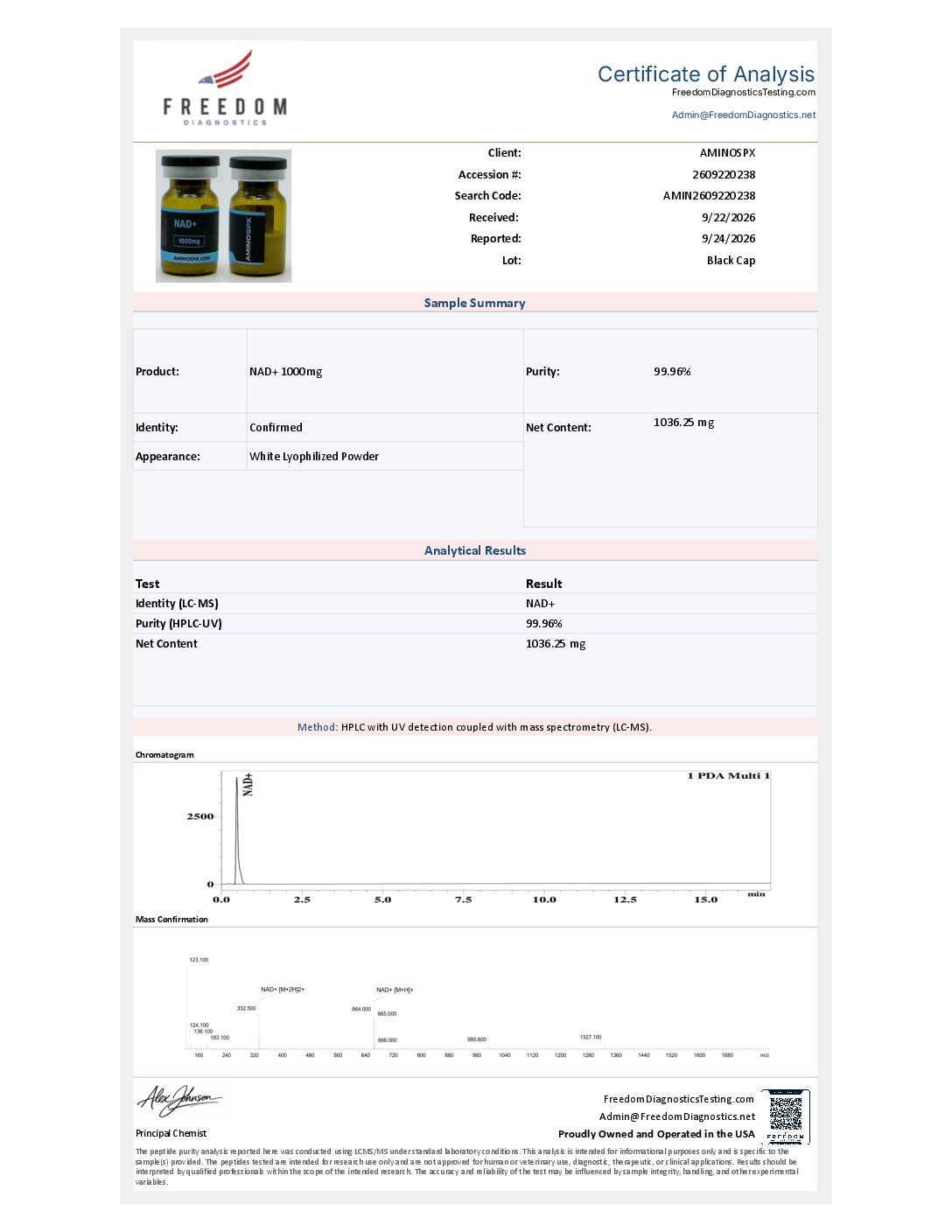
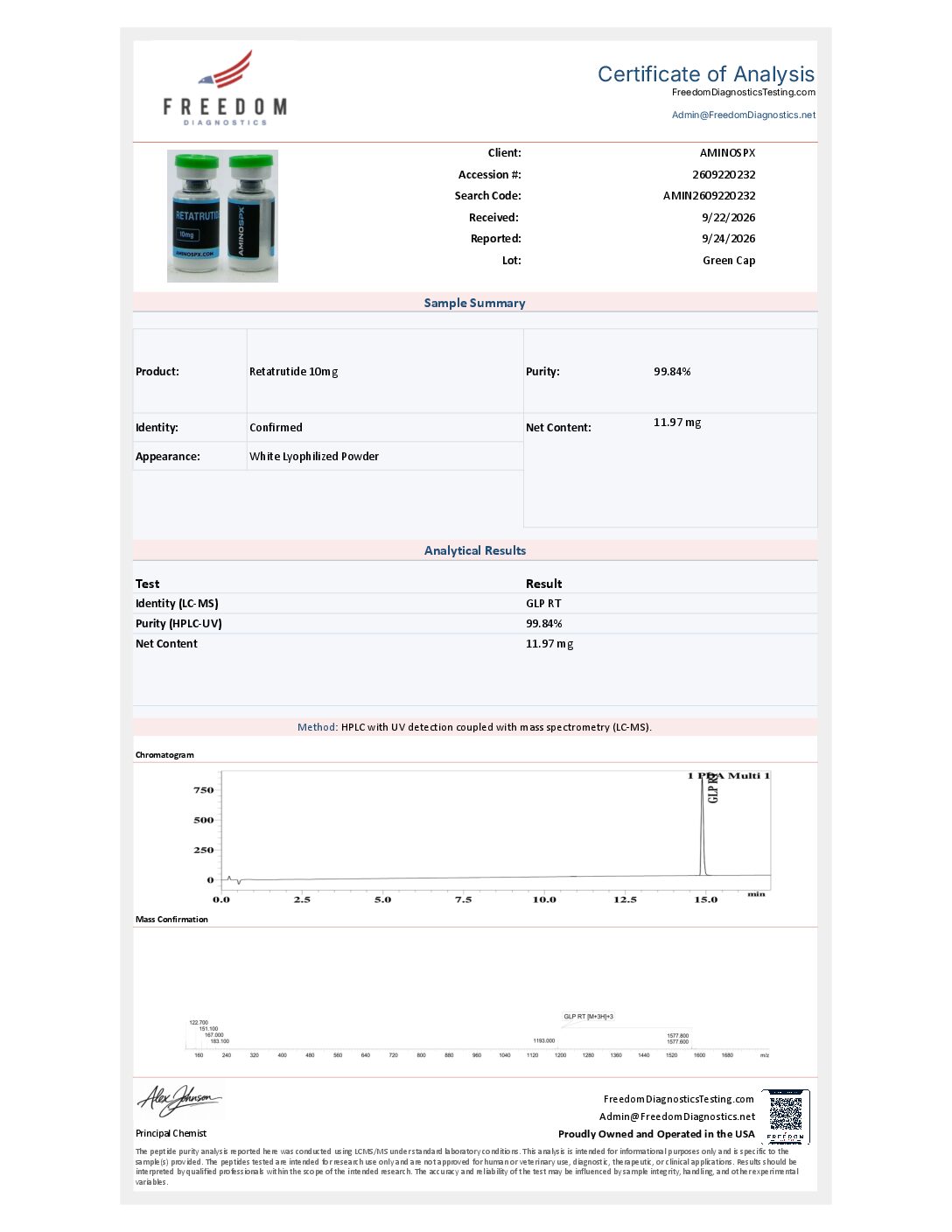
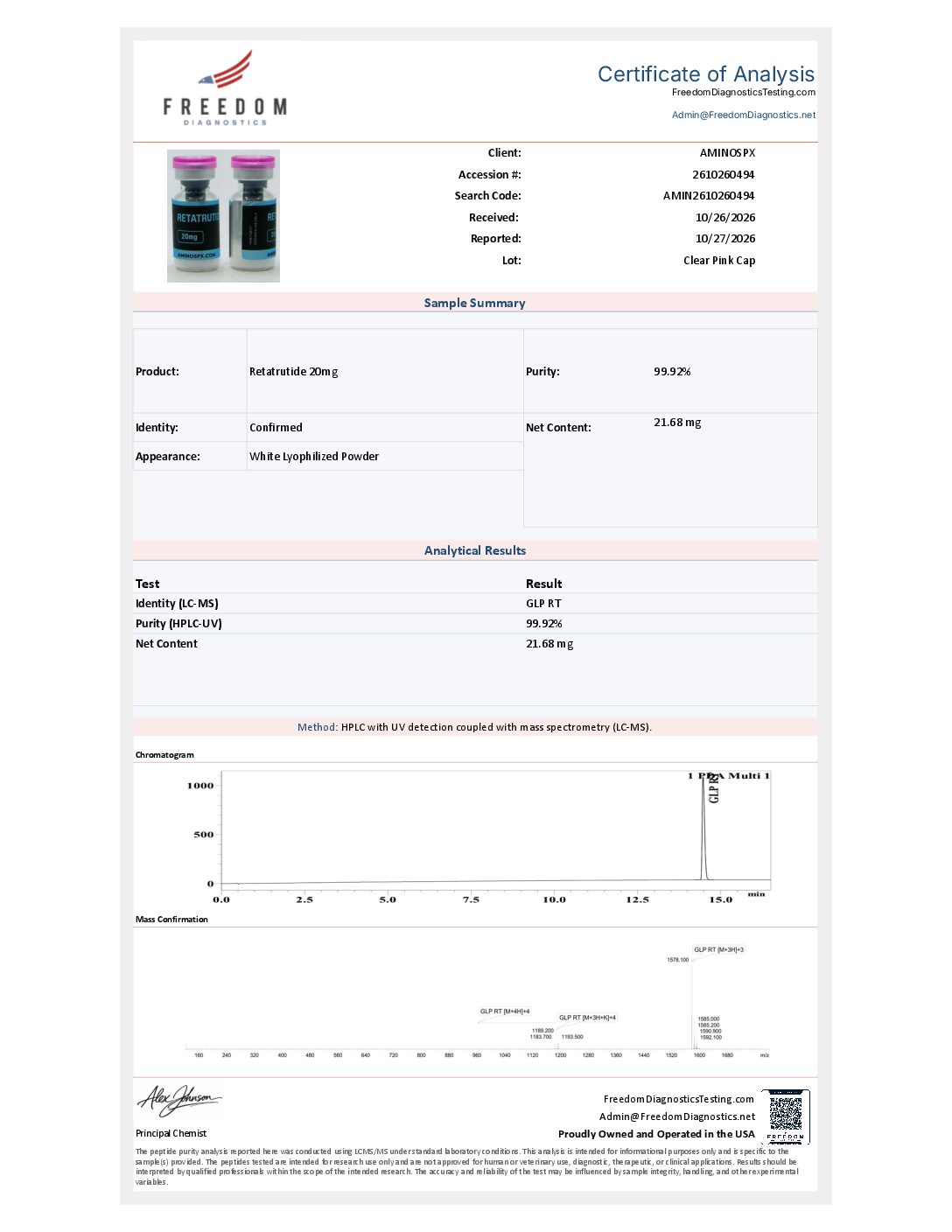
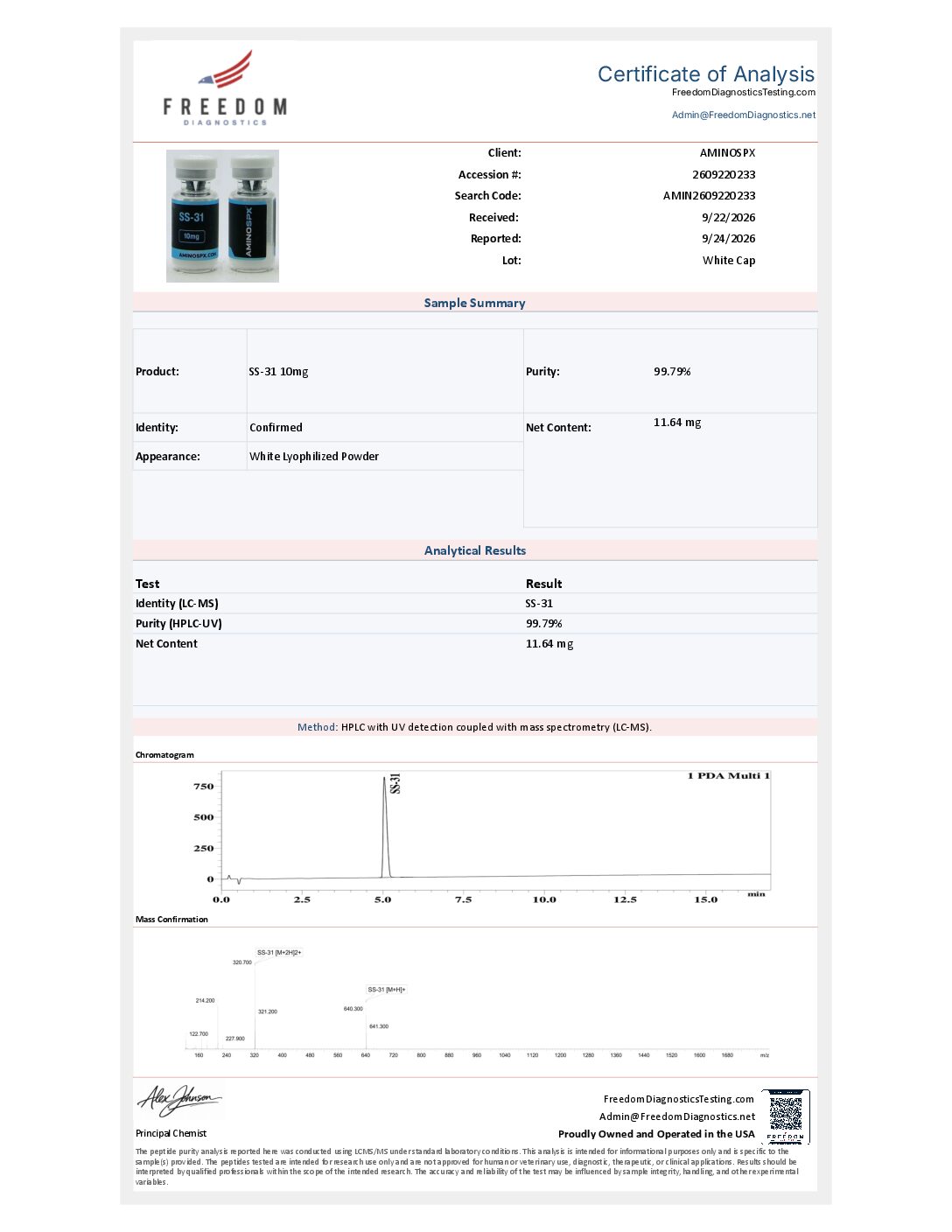
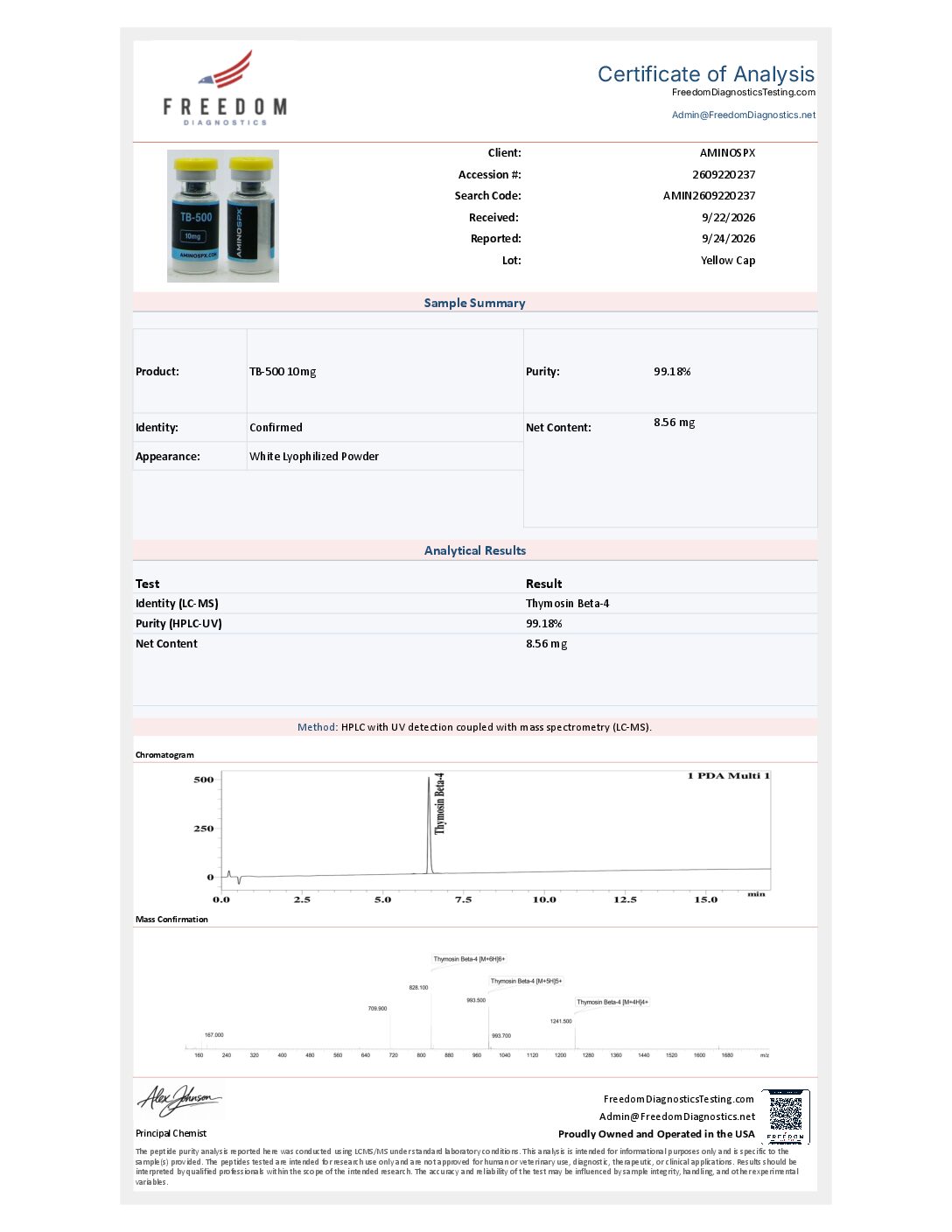
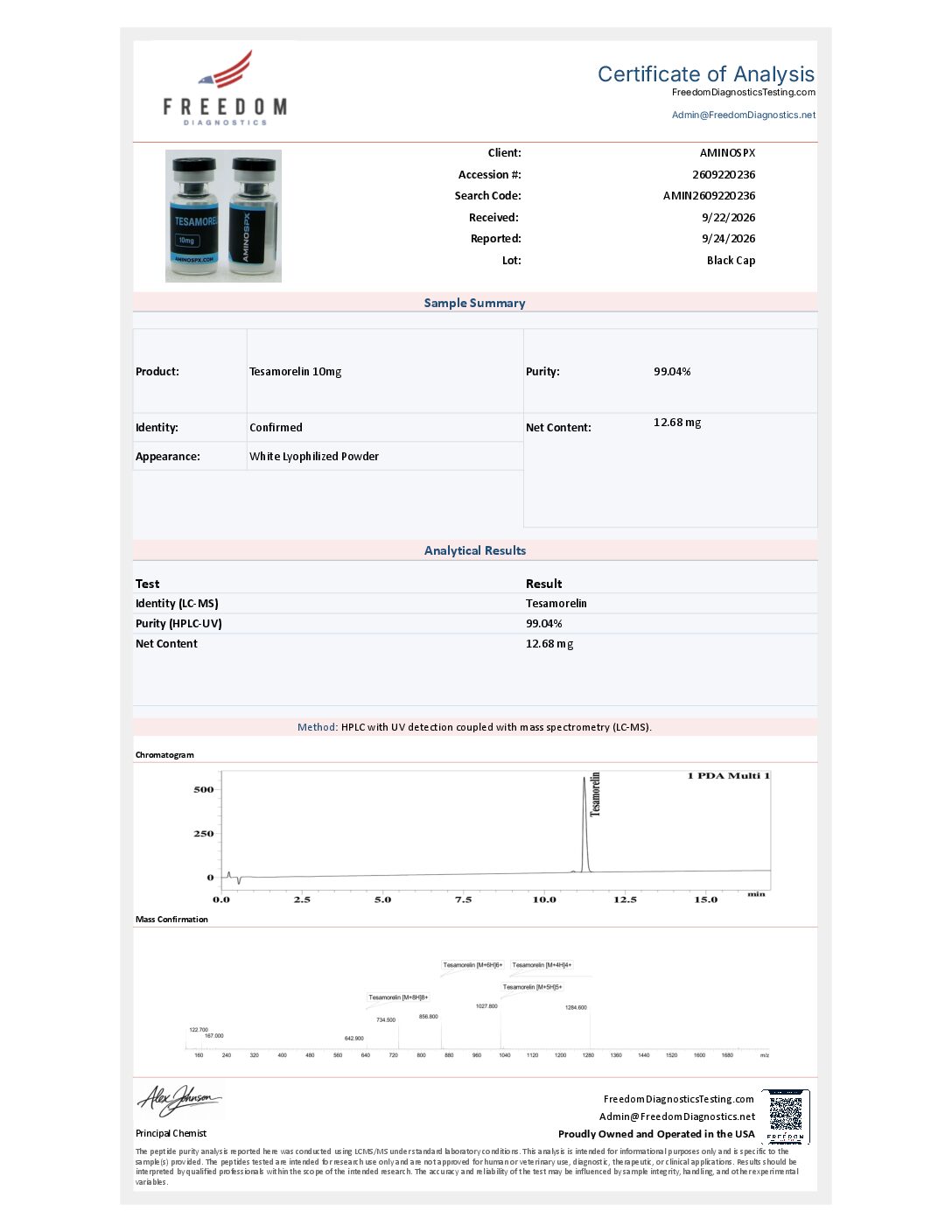
Peptide purity is an analytical measurement used to assess the composition of a research sample. Laboratory reports commonly express purity as a percentage, often determined using High-Performance Liquid Chromatography (HPLC).
What does 99% purity mean?
A reported purity of 99% generally indicates that approximately 99% of the integrated chromatographic peak area is attributed to the target compound under the testing conditions used. It does not necessarily mean that 99% of the total vial contents consist of that compound.
Purity vs Net Content
- Purity: Estimates the relative proportion of the target compound among detected components using a specified analytical method.
- Net Content: Measures the quantity of the target compound present in the tested sample, where quantitative testing has been performed.
- Identity: Assesses whether the detected compound is consistent with the expected molecular identity.
Why purity results can vary
Reported purity can be influenced by the analytical method, sample preparation, detection conditions and chromatographic peak integration.
What purity testing does not establish
A high reported purity percentage does not automatically confirm sterility, the absence of all contaminants, biological safety or suitability for human use. These characteristics require separate assessment and, where applicable, additional testing.
AMINOSPX publishes available Certificates of Analysis (COAs) so researchers can review reported purity, identity and net content results for individual tested samples.