GHK-Cu
Price range: $50.00 through $100.00
AUDBuy GHK-Cu Australia
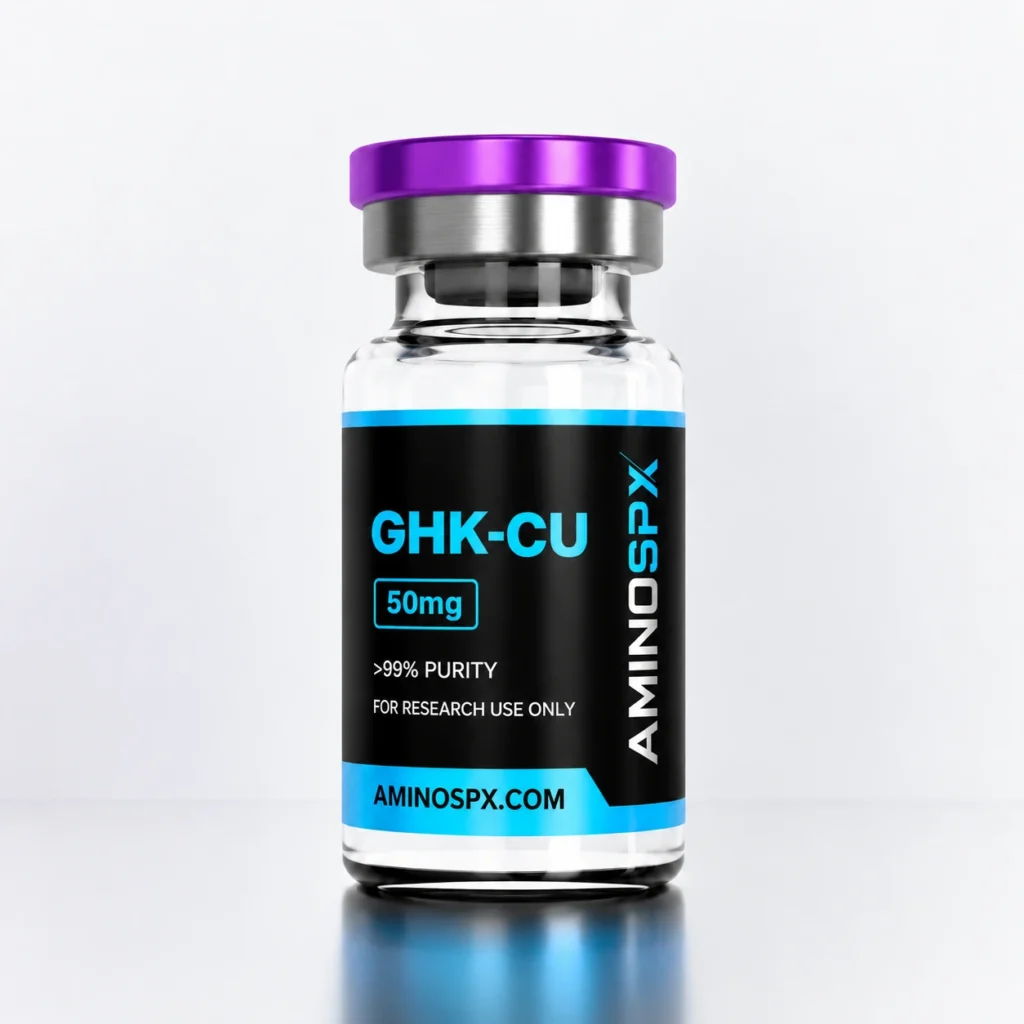
GHK-Cu is a naturally occurring copper-binding peptide studied for its interactions with collagen biology, connective-tissue structure and cellular signalling.
Volume discounts
- 2 units 5% off
- 3–4 units 7.5% off
- 5+ units 10% off
Discounts are calculated separately for each product.
Out of Stock
RESEARCH USE ONLY
AMINOSPX products are supplied strictly for legitimate scientific, laboratory and in vitro research.
Not intended for human or animal consumption.
Overview
GHK-Cu (Glycyl-L-Histidyl-L-Lysine Copper Complex) is a naturally occurring copper-binding tripeptide composed of three amino acids complexed with copper ions.
Its unique copper-binding properties have attracted scientific interest in collagen biology, connective-tissue organisation and the processes involved in cellular communication and tissue remodelling.
AMINOSPX supplies GHK-Cu exclusively for scientific in vitro research, not for human, veterinary, medical, therapeutic or diagnostic use.
Molecular Profile
- Molecular Name
- GHK-Cu
- Chemical Classification
- Glycyl-L-Histidyl-L-Lysine Copper Complex
- Molecular Formula
- C14H22CuN6O4
- Molecular Weight
- 402.9 g/mol
- Length
- 3 Amino Acids
- CAS
- 89030-95-5
- PubChem CID
- 71587328
- Form
- Lyophilised Powder
- Color
- Blue to Purple
- Purity
- >99% HPLC
- Verification
- Third-Party Laboratory Tested
- Packaging
- Sterile Vial
Research Applications
Key areas of research involving GHK-Cu include:
Collagen Biology
Examines how GHK-Cu interacts with pathways involved in collagen formation and the structural proteins that support connective tissue.
Tissue Structure
Explores interactions with cells and proteins involved in organising and maintaining the surrounding tissue framework.
Copper Signalling
Investigates how the peptide's copper-binding properties relate to cellular activity and copper-dependent biological processes.
Inflammatory Signalling
Studies changes in inflammation-related cellular signals and regulatory pathways in experimental models.
Research Disclaimer
Information provided on this page is supplied solely for laboratory, analytical, scientific and in vitro research purposes. Products are not intended for human or veterinary use, and the information provided does not constitute medical, pharmaceutical, healthcare or other professional advice.
Nothing contained on this website should be interpreted as a recommendation regarding the diagnosis, treatment, prevention or management of any disease, condition or health outcome.
Researchers are responsible for determining the suitability of products for their intended laboratory applications and for ensuring compliance with all applicable laws, regulations and institutional requirements.
Storage & Handling
Storage Recommendations
- Store the lyophilised compound sealed and dry below 25°C.
- Once reconstituted, store at 2-8°C.
- Minimise repeated freeze–thaw cycles.
- Protect from heat, moisture and direct light.
Handling Recommendations
- Handle compounds in a clean, controlled environment to minimise contamination.
- Use sterile practices and follow product-specific preparation and reconstitution protocols.
- Maintain accurate records of product identification and handling.
- Avoid direct contact with skin or eyes, and prevent inhalation or ingestion.
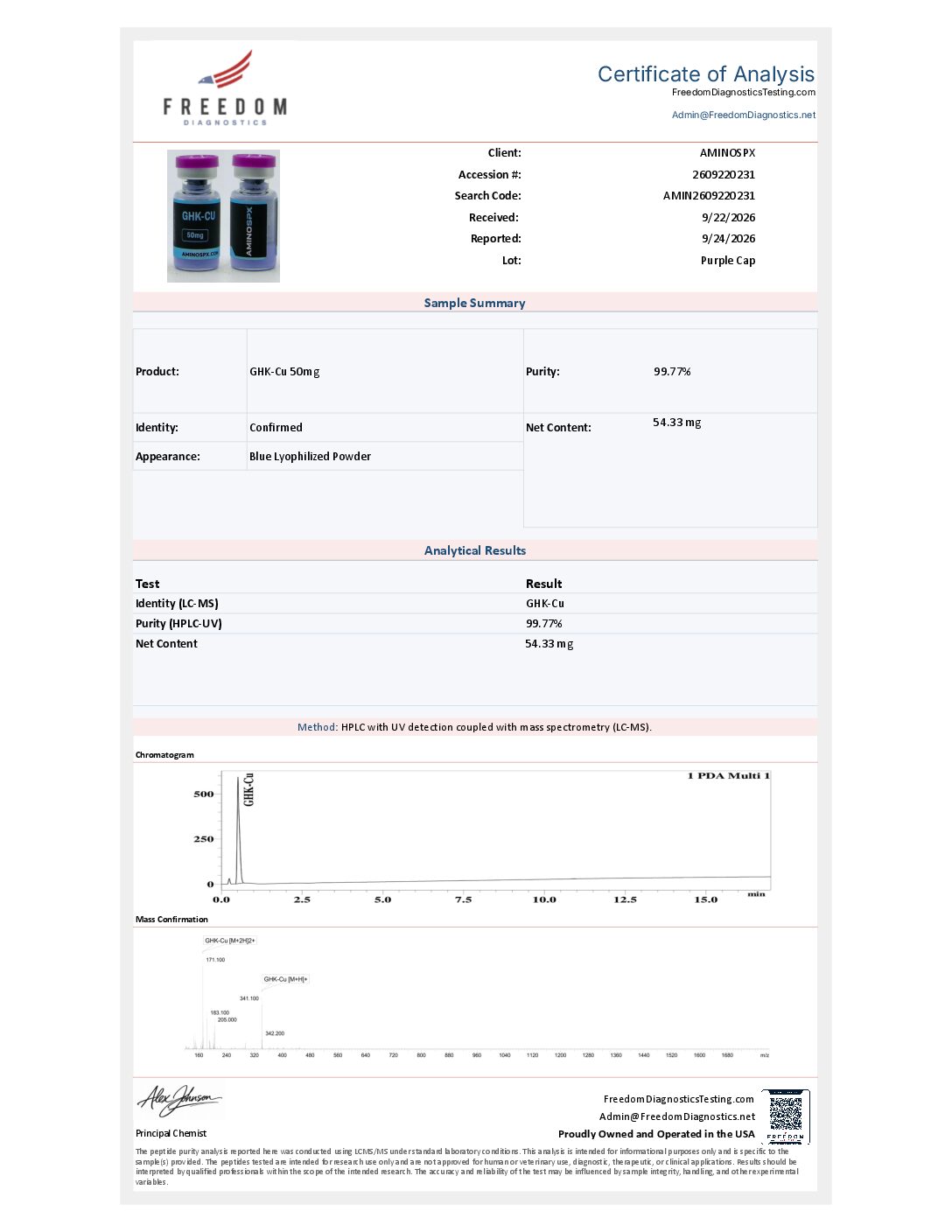
Certificate of Analysis (COA)
Important Information
Certificates of Analysis are obtained through independent third-party analytical laboratories and provided for research and informational purposes only.
Compounds tested are intended for research use only and are not approved for human or veterinary use, diagnostic, therapeutic or clinical applications.
Results should be interpreted by qualified professionals within the scope of the intended research and should not be considered a guarantee of suitability for any particular application.
Frequently Asked Questions
Why is GHK-Cu blue?
Its characteristic blue colour comes from copper ions bound to the GHK peptide. The exact appearance can vary depending on the formulation and physical conditions.
What's the difference between GHK and GHK-Cu?
GHK is a three-amino-acid peptide, while GHK-Cu is the copper complex formed when GHK binds copper ions.
Why is GHK-Cu associated with collagen research?
GHK-Cu has been examined in studies involving collagen-related signalling, extracellular-matrix organisation and cellular communication.
Does the blue colour confirm GHK-Cu purity?
No. Colour alone cannot establish purity, identity or concentration. These properties require appropriate laboratory analysis.
How should GHK-Cu be stored?
Store lyophilised material below 25°C in a sealed container, protected from heat and moisture. Once reconstituted, store at 2–8°C and avoid repeated freezing and thawing to help maintain product integrity.
Customer Reviews
Be the first to leave a review
Share your experience with this product and help other researchers make informed decisions.
Share your experience.