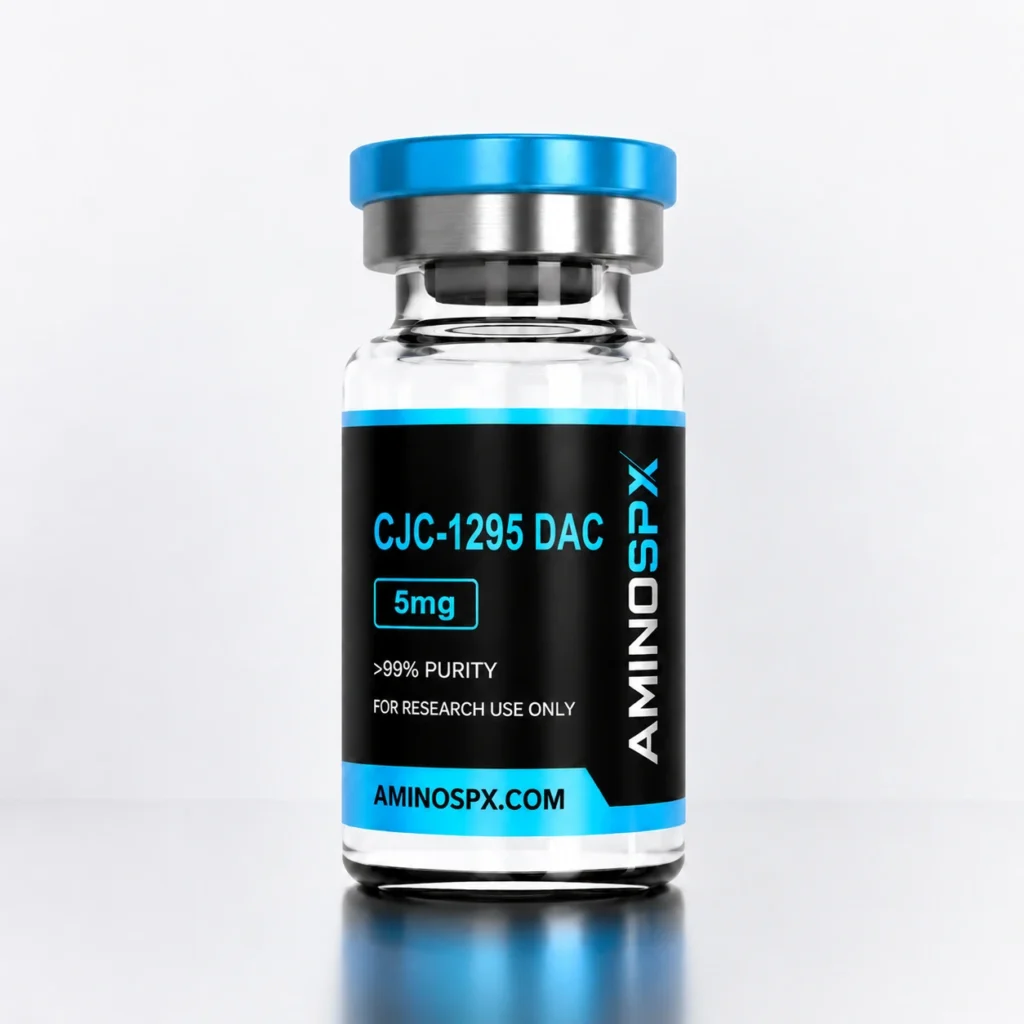
CJC-1295 DAC
$99.00
AUDBuy CJC-1295 DAC Australia
CJC-1295 DAC is a long-acting synthetic GHRH analogue studied for its extended activity in growth hormone signalling and receptor interactions.
Volume discounts
- 2 units 5% off
- 3–4 units 7.5% off
- 5+ units 10% off
Discounts are calculated separately for each product.
Out of Stock
RESEARCH USE ONLY
AMINOSPX products are supplied strictly for legitimate scientific, laboratory and in vitro research.
Not intended for human or animal consumption.
Overview
CJC-1295 DAC is a synthetic analogue of Growth Hormone-Releasing Hormone (GHRH), incorporating a Drug Affinity Complex (DAC) designed to bind with circulating albumin and extend the peptide’s persistence.
This modification provides researchers with a longer-acting GHRH analogue for investigating sustained receptor signalling, growth hormone regulation and peptide structure–function relationships.
AMINOSPX supplies CJC-1295 DAC exclusively for scientific in vitro research, not for human, veterinary, medical, therapeutic or diagnostic use.
Molecular Profile
- Molecular Name
- CJC-1295 DAC
- Chemical Classification
- Long-Acting Albumin-Binding GHRH Analogue Peptide
- Molecular Formula
- C165H269N47O46
- Molecular Weight
- 3647.2 g/mol (approx.)
- Length
- 30 Amino Acids
- CAS
- 446262-90-4
- PubChem CID
- Not supplied in specification
- Form
- Lyophilised Powder
- Color
- White
- Purity
- >99% (HPLC)
- Verification
- Third-Party Laboratory Tested
- Packaging
- Sterile Vial
Research Applications
CJC-1295 DAC is examined in several areas of peptide and hormone-signalling research, including:
Growth Hormone Signalling
Examines how prolonged GHRH receptor activation relates to growth hormone release and regulation.
GH & IGF-1 Activity
Investigates growth hormone and IGF-1 responses associated with extended GHRH signalling.
Peptide Half-Life
Explores how DAC-mediated albumin binding influences peptide stability and circulation time.
Hormonal Communication
Focuses on signalling between the brain and pituitary gland and how prolonged receptor activity influences these pathways.
Supporting Research
Explore published scientific research relevant to CJC-1295 DAC.
Research Disclaimer
Information provided on this page is supplied solely for laboratory, analytical, scientific and in vitro research purposes. Products are not intended for human or veterinary use, and the information provided does not constitute medical, pharmaceutical, healthcare or other professional advice.
Nothing contained on this website should be interpreted as a recommendation regarding the diagnosis, treatment, prevention or management of any disease, condition or health outcome.
Researchers are responsible for determining the suitability of products for their intended laboratory applications and for ensuring compliance with all applicable laws, regulations and institutional requirements.
Storage & Handling
Storage Recommendations
- Store the lyophilised compound sealed and dry below 25°C.
- Once reconstituted, store at 2-8°C.
- Minimise repeated freeze–thaw cycles.
- Protect from heat, moisture and direct light.
Handling Recommendations
- Handle compounds in a clean, controlled environment to minimise contamination.
- Use sterile practices and follow product-specific preparation and reconstitution protocols.
- Maintain accurate records of product identification and handling.
- Avoid direct contact with skin or eyes, and prevent inhalation or ingestion.
Certificate of Analysis (COA)
A Certificate of Analysis (COA) is not yet available for this product. Certificates are added to our COA Library as independent laboratory testing is completed.
Frequently Asked Questions
What does DAC stand for?
DAC stands for Drug Affinity Complex. It is a chemical modification designed to promote interaction with albumin, a protein found in blood.
How does DAC change CJC-1295?
The modification increases the peptide's persistence in biological systems, making it useful for examining prolonged GHRH receptor signalling.
Is CJC-1295 DAC the same as CJC-1295 No DAC?
No. Although the names are similar, the DAC modification changes the molecule's structure and behaviour.
Why is albumin binding important in peptide research?
Albumin binding can influence how a molecule is distributed and cleared. This is particularly relevant when studying how long a peptide remains active in an experimental system.
Customer Reviews
Be the first to leave a review
Share your experience with this product and help other researchers make informed decisions.
Share your experience.