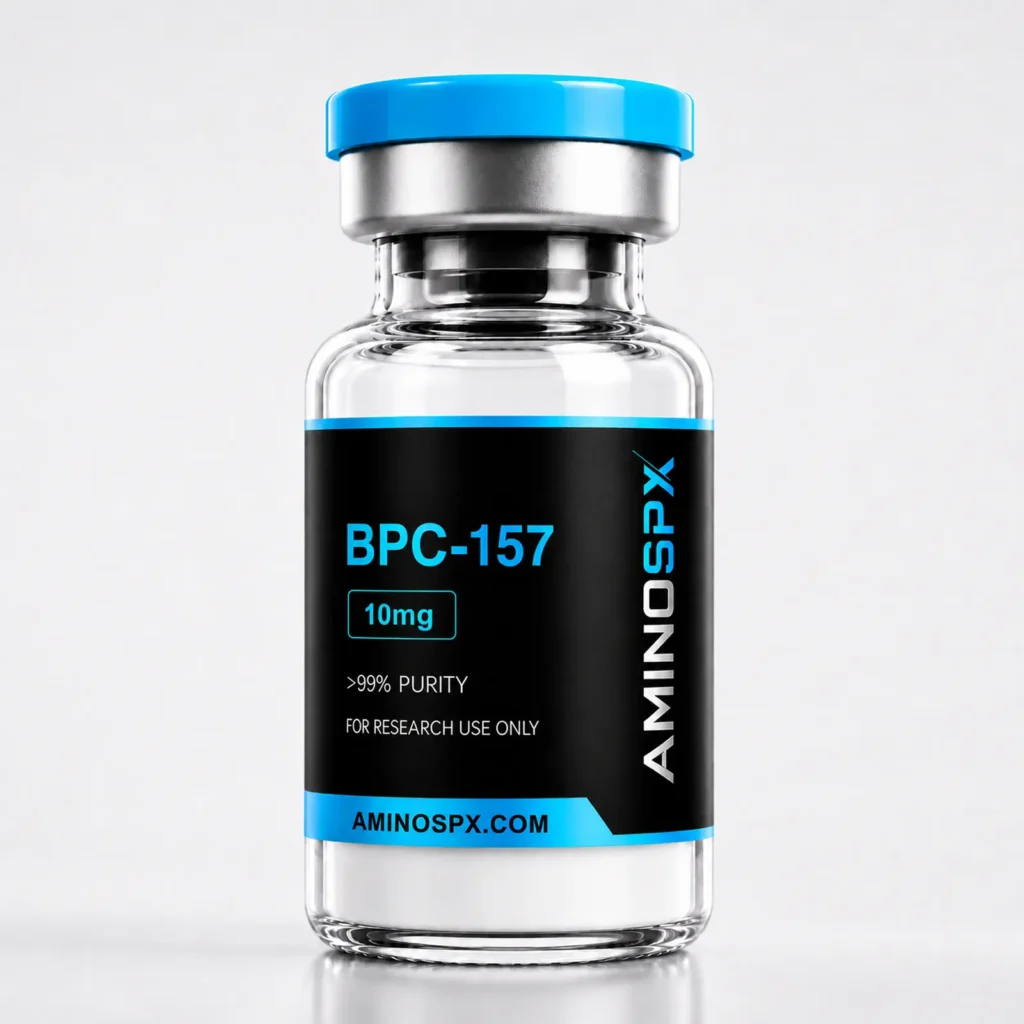
BPC-157
$79.00
AUDBuy BPC-157 Australia
A gastric-derived research peptide examined in experimental studies of tissue organisation, vascular signalling and gastrointestinal biology.
In stock
Out of Stock
RESEARCH USE ONLY
AMINOSPX products are supplied exclusively for legitimate laboratory, analytical, scientific and in vitro research purposes and are not intended for human or animal consumption.
Overview
BPC-157 is a synthetic 15-amino-acid research peptide corresponding to a defined fragment associated with a protective protein sequence studied in human gastric juice. Its compact gastric-derived structure provides a defined research model for exploring peptide stability, cellular and vascular communication, connective-tissue biology and tissue-organisation pathways. Most published research involving BPC-157 remains preclinical.
AMINOSPX supplies BPC-157 exclusively for legitimate laboratory, analytical, scientific and in vitro research purposes.
Not intended for human consumption or for medical, therapeutic, diagnostic, veterinary, cosmetic or food use.
Molecular Profile
- Molecular Name
- BPC-157
- Chemical Classification
- Synthetic Gastric-Derived Pentadecapeptide Research Compound
- Molecular Formula
- C62H98N16O22
- Molecular Weight
- 1419.5 g/mol
- Length
- 15 Amino Acids
- CAS
- 137525-51-0
- PubChem CID
- 9941957
- Form
- Lyophilised Powder
- Color
- White
- Purity
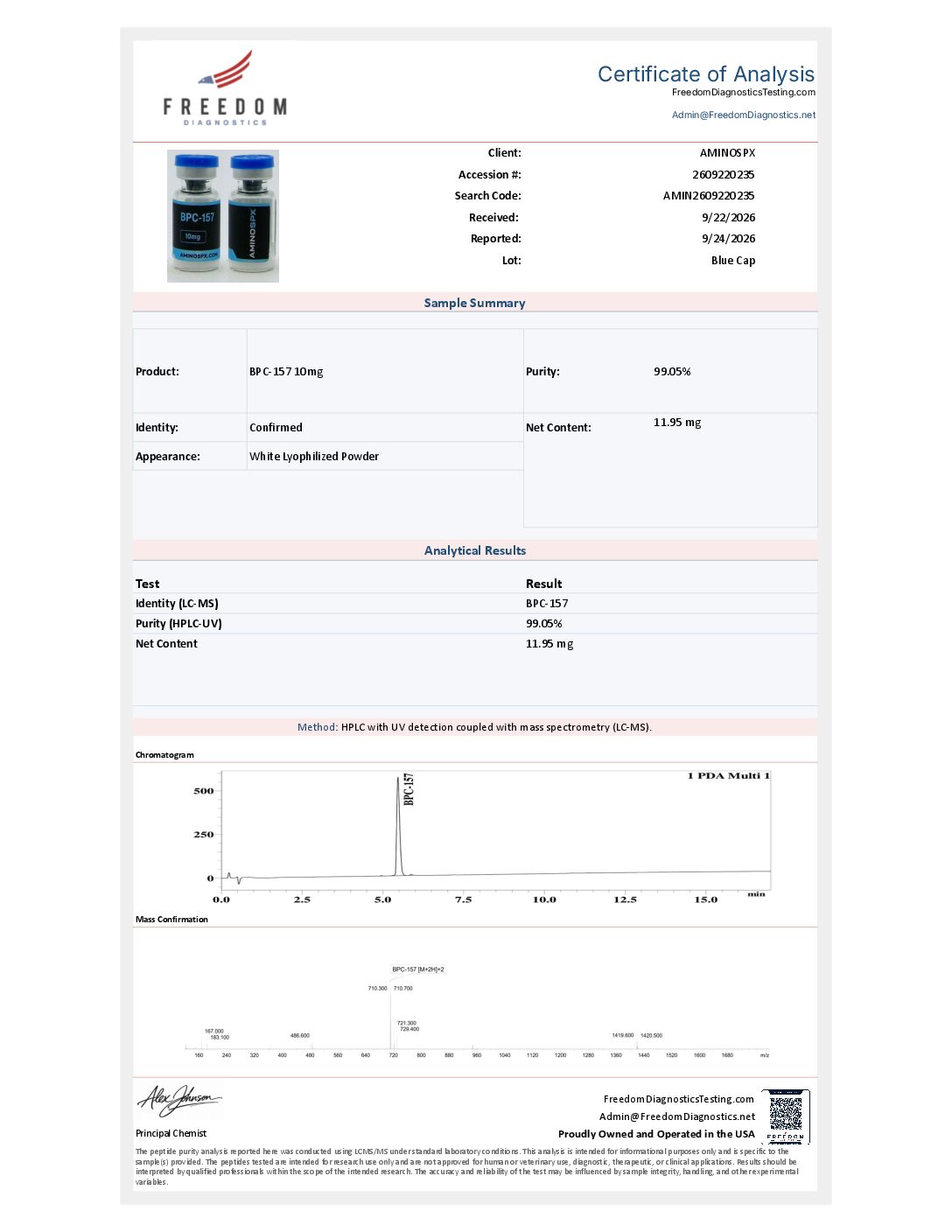
- >99% HPLC
- Verification
- Third-Party Laboratory Tested
- Packaging
- Sterile Vial
Research Applications
BPC-157 is studied in laboratory and in-vitro research across several areas of scientific interest, including:
Tissue-Repair Signalling Research
Studied in experimental models examining cellular signalling associated with tissue-repair processes.
Angiogenesis Research
Investigated in laboratory models examining pathways involved in vascular and endothelial responses.
Gastrointestinal Tissue Research
Studied in experimental models involving gastrointestinal tissue and epithelial integrity.
Inflammatory Signalling Research
Used to investigate cellular pathways associated with experimental inflammatory responses.
Research Disclaimer
Information provided on this page is supplied solely for laboratory, analytical, scientific and in vitro research purposes. Products are not intended for human or veterinary use, and the information provided does not constitute medical, pharmaceutical, healthcare or other professional advice.
Nothing contained on this website should be interpreted as a recommendation regarding the diagnosis, treatment, prevention or management of any disease, condition or health outcome.
Researchers are responsible for determining the suitability of products for their intended laboratory applications and for ensuring compliance with all applicable laws, regulations and institutional requirements.
Storage & Handling
Appropriate storage and laboratory handling help maintain product integrity and research consistency.
Storage Recommendations
- Store the lyophilised compound sealed and dry below 25°C.
- Once reconstituted, store at 2–8°C in accordance with the applicable laboratory research protocol.
- Minimise repeated freeze-thaw cycles.
- Protect from heat, moisture and direct light.
Handling Recommendations
- Use appropriate laboratory personal protective equipment (PPE).
- Follow recognised laboratory procedures appropriate to the intended research application.
- Avoid contact with eyes or skin, and avoid inhalation or ingestion.
- Maintain appropriate product identification and laboratory documentation.
- Dispose of unused material according to institutional procedures and applicable regulations.
Certificate of Analysis (COA)
Important Information
Certificates of Analysis are obtained through independent third-party analytical laboratories and provided for research and informational purposes only.
Compounds tested are intended for research use only and are not approved for human or veterinary use, diagnostic, therapeutic or clinical applications.
Results should be interpreted by qualified professionals within the scope of the intended research and should not be considered a guarantee of suitability for any particular application.
Frequently Asked Questions
What is BPC-157?
BPC-157 is a synthetic 15-amino-acid research peptide corresponding to a defined gastric-derived sequence. Its compact structure provides researchers with a model for investigating peptide stability and communication pathways involved in cellular, vascular and connective-tissue biology.
Why is BPC-157 studied in laboratory research?
BPC-157 is studied as a research model for examining how peptide signalling interacts with tissue organisation, vascular communication and gastrointestinal biology. This allows researchers to explore relationships between these systems within controlled experimental models.
How should BPC-157 be stored?
The lyophilised material should be stored in a sealed, dry environment below 25°C. Where laboratory reconstitution is undertaken, store reconstituted material at 2–8°C. Avoid freeze–thaw cycles to help preserve product integrity.
Is a Certificate of Analysis (COA) available?
Where available, the current Certificate of Analysis (COA) is published on the product page for reference. Aminospx progressively publishes analytical documentation as it becomes available for individual products.
Customer Reviews
Be the first to leave a review
Share your experience with this product and help other researchers make informed decisions.
Share your experience with this product.