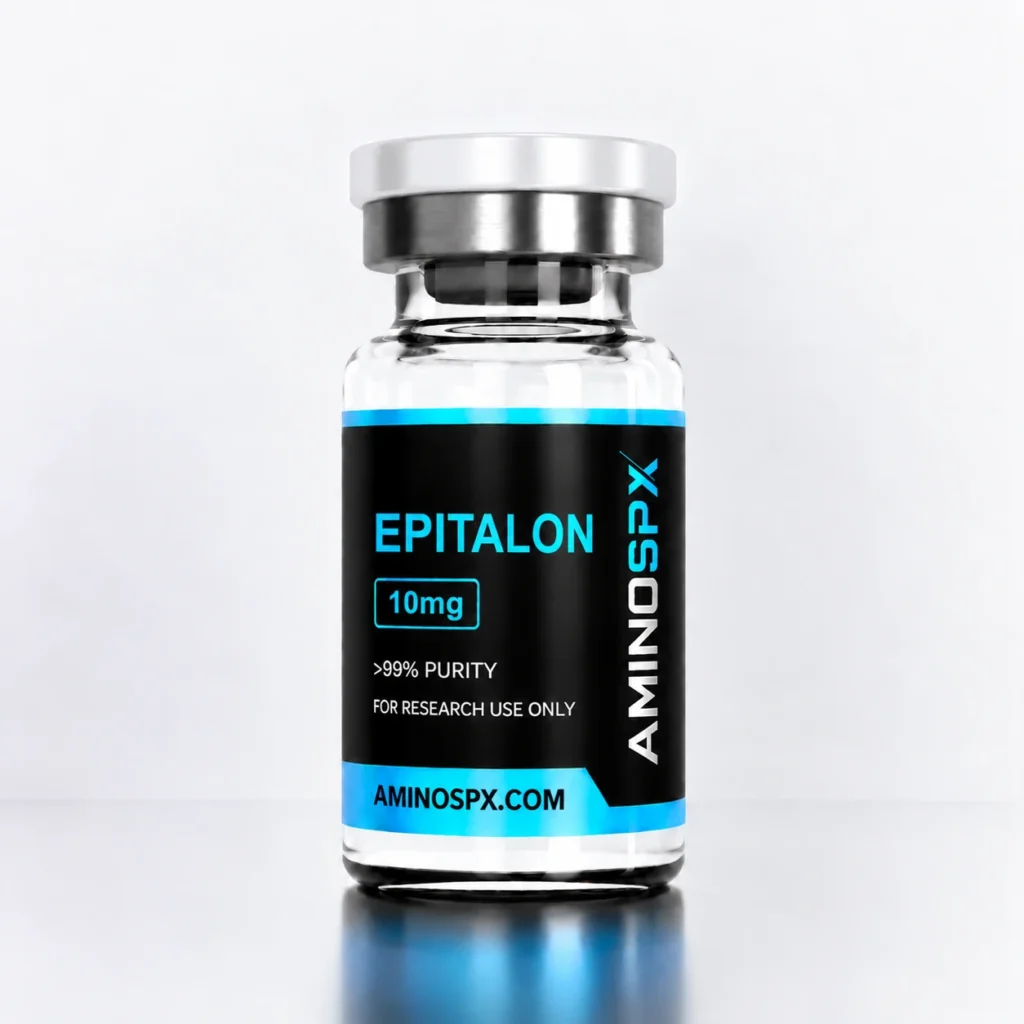
EPITALON
Price range: $50.00 through $165.00
AUDBuy EPITALON Australia
Epitalon is a synthetic tetrapeptide studied in laboratory research involving telomere biology, cellular ageing and circadian signalling.
Volume discounts
- 2 units 5% off
- 3–4 units 7.5% off
- 5+ units 10% off
Discounts are calculated separately for each product.
Out of Stock
RESEARCH USE ONLY
AMINOSPX products are supplied strictly for legitimate scientific, laboratory and in vitro research.
Not intended for human or animal consumption.
Overview
Epitalon, also known as Epithalon, is a synthetic tetrapeptide composed of four amino acids with the sequence AEDG (alanine, glutamic acid, aspartic acid and glycine). It was developed through research into Epithalamin, a peptide preparation derived from the pineal gland.
Its compact structure makes it a subject of laboratory research involving cellular regulation, circadian signalling, telomere biology and age-related cellular processes.
AMINOSPX supplies Epitalon exclusively for scientific in vitro research, not for human, veterinary, medical, therapeutic or diagnostic use.
Molecular Profile
- Molecular Name
- Epitalon
- Chemical Classification
- Synthetic Pineal-Derived Tetrapeptide
- Molecular Formula
- C14H22N4O9
- Molecular Weight
- 390.35 g/mol (approx.)
- Length
- 4 Amino Acids
- CAS
- 307297-39-8
- PubChem CID
- 71313455
- Form
- Lyophilised Powder
- Color
- White
- Purity
- >99% (HPLC)
- Verification
- Third-Party Laboratory Tested
- Packaging
- Sterile Vial
Research Applications
Epitalon is explored in several areas of cellular and molecular research, including:
Telomere Biology
Examines how Epitalon may interact with telomere length and telomerase activity in experimental cell models.
Cellular Ageing
Explores changes in cell lifespan, cellular activity and biological processes associated with ageing.
Biological Rhythms
Investigates possible relationships between the peptide, circadian signalling and the body's natural biological clocks.
Oxidative Stress
Examines how experimental exposure to Epitalon relates to oxidative stress and cellular responses to environmental or metabolic stress.
Research Disclaimer
Information provided on this page is supplied solely for laboratory, analytical, scientific and in vitro research purposes. Products are not intended for human or veterinary use, and the information provided does not constitute medical, pharmaceutical, healthcare or other professional advice.
Nothing contained on this website should be interpreted as a recommendation regarding the diagnosis, treatment, prevention or management of any disease, condition or health outcome.
Researchers are responsible for determining the suitability of products for their intended laboratory applications and for ensuring compliance with all applicable laws, regulations and institutional requirements.
Storage & Handling
Storage Recommendations
- Store the lyophilised compound sealed and dry below 25°C.
- Once reconstituted, store at 2-8°C.
- Minimise repeated freeze–thaw cycles.
- Protect from heat, moisture and direct light.
Handling Recommendations
- Handle compounds in a clean, controlled environment to minimise contamination.
- Use sterile practices and follow product-specific preparation and reconstitution protocols.
- Maintain accurate records of product identification and handling.
- Avoid direct contact with skin or eyes, and prevent inhalation or ingestion.
Certificate of Analysis (COA)
A Certificate of Analysis (COA) is not yet available for this product. Certificates are added to our COA Library as independent laboratory testing is completed.
Frequently Asked Questions
What is Epitalon made from?
Epitalon is a synthetic tetrapeptide containing four amino acids: alanine, glutamic acid, aspartic acid and glycine. Its sequence is commonly abbreviated AEDG.
Is Epitalon the same as Epithalamin?
No. Epitalon is a defined synthetic peptide, while Epithalamin refers to a peptide preparation originally obtained from pineal gland tissue.
Why is Epitalon associated with telomeres?
Experimental research has examined possible relationships between Epitalon, telomerase activity and telomere-related cellular processes. These findings do not establish that it slows human ageing.
What is the difference between Epitalon 10 mg and 50 mg?
Both strengths refer to the same peptide. The difference is the labelled quantity of material supplied in each vial, not a different molecular structure.
Customer Reviews
Be the first to leave a review
Share your experience with this product and help other researchers make informed decisions.
Share your experience.