IGF-1 LR3
$149.00
AUDBuy IGF-1 LR3 Australia
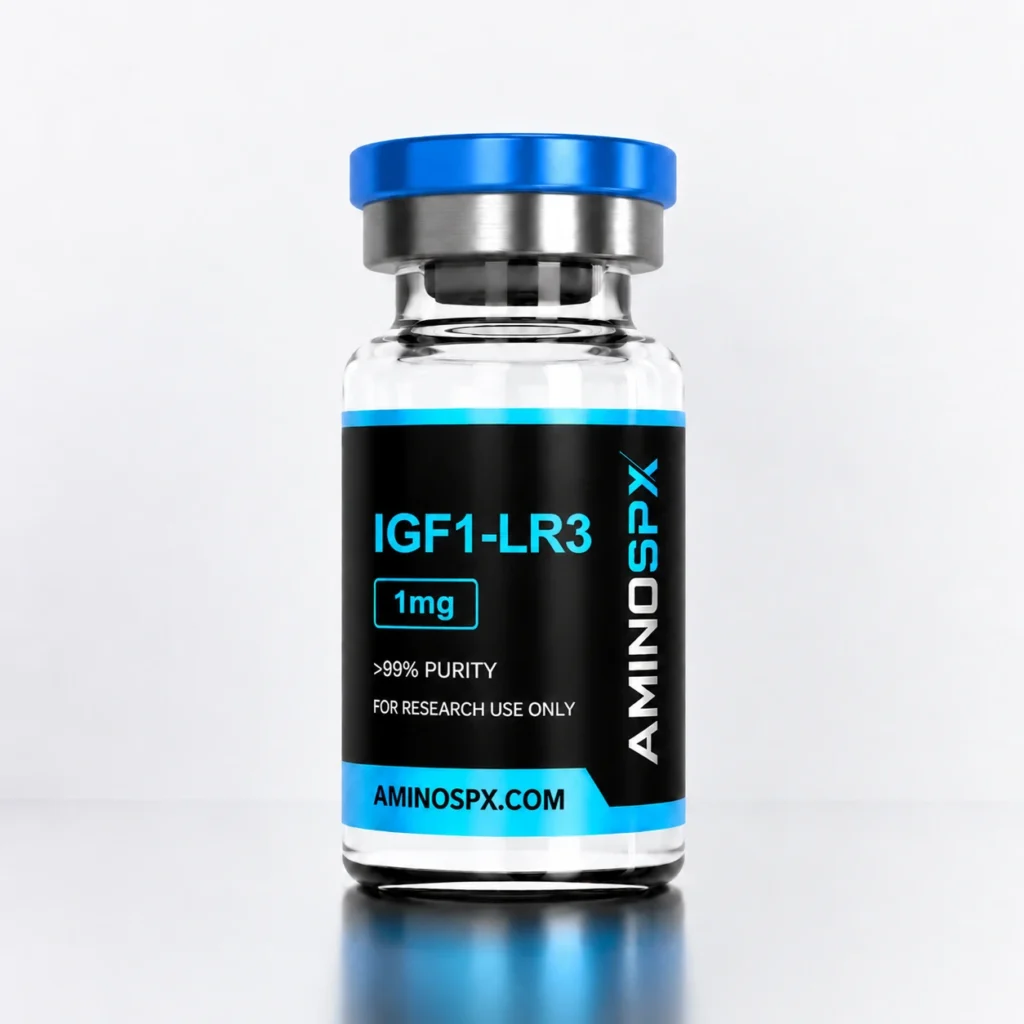
IGF-1 LR3 is a modified form of insulin-like growth factor-1 studied for its interactions with cell growth, IGF-1 receptor signalling and metabolic regulation.
Volume discounts
- 2 units 5% off
- 3–4 units 7.5% off
- 5+ units 10% off
Discounts are calculated separately for each product.
Out of Stock
RESEARCH USE ONLY
AMINOSPX products are supplied strictly for legitimate scientific, laboratory and in vitro research.
Not intended for human or animal consumption.
Overview
IGF-1 LR3 (Long R3 Insulin-Like Growth Factor-1) is a synthetic version of the naturally occurring growth factor IGF-1, a protein involved in regulating cell growth and development.
Its modified structure reduces binding to certain IGF-binding proteins, changing how it behaves compared with natural IGF-1. This makes it relevant to research into IGF-1 receptor activity, cell division, protein synthesis and metabolic signalling.
AMINOSPX supplies IGF-1 LR3 exclusively for scientific in vitro research, not for human, veterinary, medical, therapeutic or diagnostic use.
Molecular Profile
- Molecular Name
- IGF-1 LR3
- Chemical Classification
- Long R3 Insulin-Like Growth Factor-1 Analogue
- Molecular Formula
- C400H625N111O115S9
- Molecular Weight
- Not supplied in specification
- Length
- 83 Amino Acids
- CAS
- 143045-27-6
- PubChem CID
- Not supplied in specification
- Color
- White
- Purity
- >99% HPLC
- Verification
- Third-Party Laboratory Tested
- Packaging
- Sterile Vial
Research Applications
Key areas of research involving IGF-1 LR3 include:
Cell Growth & Division
Investigates how IGF-1 LR3 interacts with receptor signalling pathways involved in cell growth and division in experimental models.
IGF-1 Receptor Activity
Explores how the modified peptide interacts with IGF-1 receptors and activates downstream cellular signalling pathways.
Protein Synthesis
Examines how IGF-1 LR3 interacts with cellular signalling pathways involved in protein synthesis and regulation.
Cellular Energy Regulation
Focuses on the relationship between IGF-1 signalling, nutrient processing and cellular metabolism.
Supporting Research
Explore published scientific research relevant to IGF-1 LR3.
Research Disclaimer
Information provided on this page is supplied solely for laboratory, analytical, scientific and in vitro research purposes. Products are not intended for human or veterinary use, and the information provided does not constitute medical, pharmaceutical, healthcare or other professional advice.
Nothing contained on this website should be interpreted as a recommendation regarding the diagnosis, treatment, prevention or management of any disease, condition or health outcome.
Researchers are responsible for determining the suitability of products for their intended laboratory applications and for ensuring compliance with all applicable laws, regulations and institutional requirements.
Storage & Handling
Storage Recommendations
- Store the lyophilised compound sealed and dry below 25°C.
- Once reconstituted, store at 2-8°C.
- Minimise repeated freeze–thaw cycles.
- Protect from heat, moisture and direct light.
Handling Recommendations
- Handle compounds in a clean, controlled environment to minimise contamination.
- Use sterile practices and follow product-specific preparation and reconstitution protocols.
- Maintain accurate records of product identification and handling.
- Avoid direct contact with skin or eyes, and prevent inhalation or ingestion.
Certificate of Analysis (COA)
A Certificate of Analysis (COA) is not yet available for this product. Certificates are added to our COA Library as independent laboratory testing is completed.
Frequently Asked Questions
What does LR3 mean in IGF-1 LR3?
LR3 stands for Long R3. It refers to structural modifications of IGF-1, including an extended sequence and an amino-acid substitution.
How is IGF-1 LR3 different from natural IGF-1?
IGF-1 LR3 is a modified analogue designed to alter its interactions with IGF-binding proteins while retaining activity at IGF-1 receptors.
What are IGF-binding proteins?
They're proteins that bind IGF molecules and influence their availability, transport and interactions within biological systems.
Why is IGF-1 LR3 associated with cell-growth research?
IGF-1 receptor signalling is involved in cellular growth, metabolism and protein synthesis. IGF-1 LR3 is used experimentally to examine these pathways and the effects of its structural modifications.
Customer Reviews
Be the first to leave a review
Share your experience with this product and help other researchers make informed decisions.
Share your experience.